PVL Closure in Ahmedabad — Paravalvular Leak Closure

What Is PVL Closure?

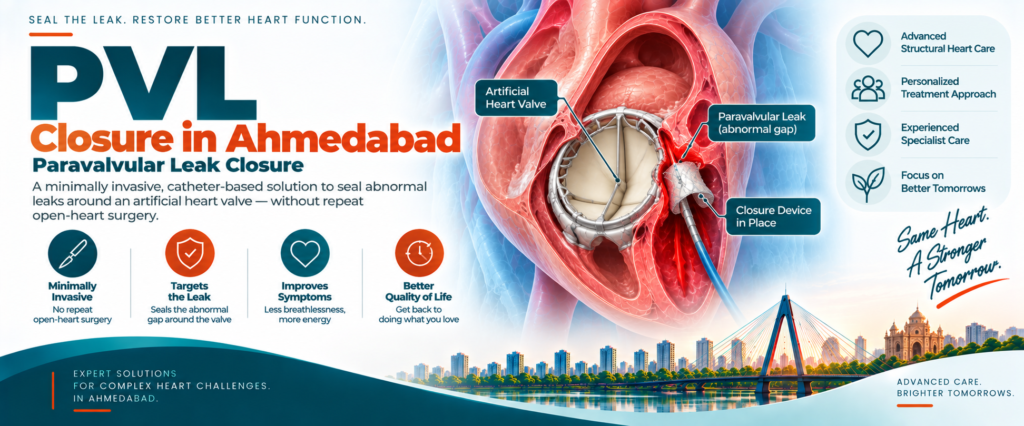
After a valve replacement, a small gap can sometimes develop between the artificial valve and the surrounding heart tissue, allowing blood to leak around the valve rather than through it properly. PVL Closure treats this specific complication using a small device delivered via catheter.

How Is PVL Closure Done?

Detailed imaging identifies the exact location and size of the leak

A catheter is guided to the site of the leak, typically via the groin

A closure device or plug is placed to seal the abnormal gap

Imaging confirms the leak has been reduced or eliminated before the catheter is withdrawn

Who Needs PVL Closure?

Patients with a prior valve replacement who have developed a leak around the valve

Patients experiencing symptoms (breathlessness, fatigue) linked to the leak

Patients for whom repeat open-heart surgery carries elevated risk

What Are the Risks of PVL Closure?

Incomplete closure, requiring a further procedure

Device interfering with the existing valve's movement

Bleeding, infection, or vascular access complications

Frequently Asked Questions

How common is a paravalvular leak after valve surgery?

It occurs in a minority of valve replacement patients, but when it causes symptoms or significant leakage, it’;s important to address.

Is this an alternative to redoing the entire valve replacement?

Yes — PVL Closure treats the specific leak without needing to replace the entire valve again.
About Dr. Abhishek Rajpopat

Dr. Abhishek Rajpopat brings 14+ years of experience in cardiology, including 750+ TAVR procedures performed globally. He specializes in advanced structural heart procedures and follows a patient-centered approach focused on complete, individualized care. His work has been recognized with multiple honors, including a Gold Medal in Cardiology. To discuss whether this procedure is right for you or a family member, visit www.drabhishekrajpopat.com.

Appointment
×

Appointment Form