Left Atrial Appendage (LAA) Closure
Left Atrial Appendage (LAA) Closure
Left Atrial Appendage (LAA) Closure is a minimally invasive procedure designed to reduce the risk of stroke in patients with atrial fibrillation (AFib), particularly those who cannot tolerate long-term anticoagulation therapy. Atrial fibrillation is an irregular heart rhythm that significantly increases the risk of blood clots forming in the left atrial appendage (LAA), a small, pouch-like structure in the left atrium of the heart. These clots can break loose and travel to the brain, causing a stroke.
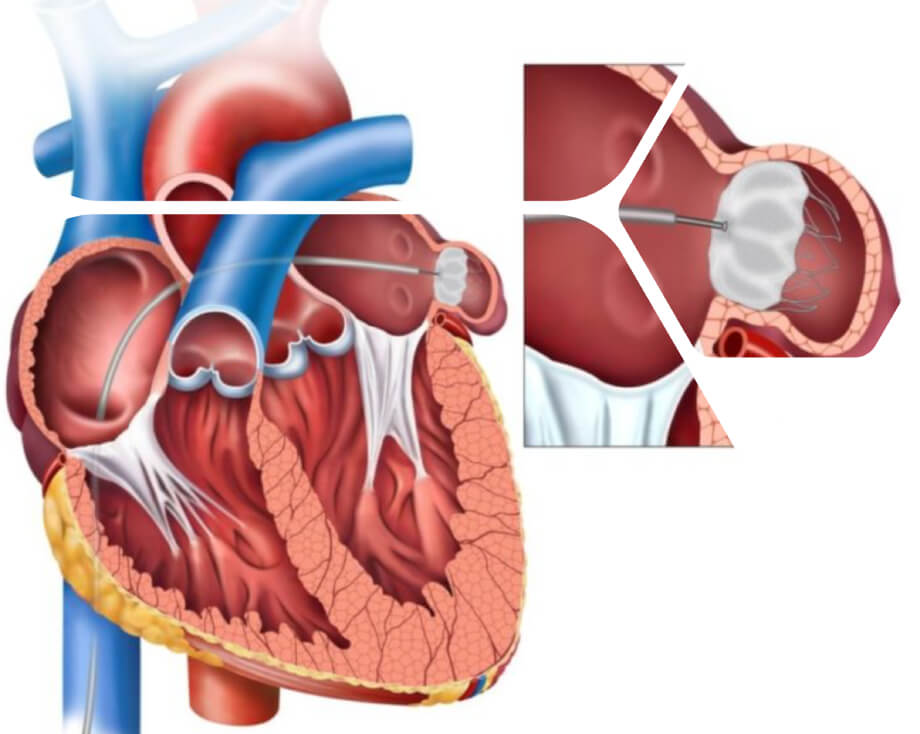
The LAA closure procedure involves sealing off the appendage to prevent blood clots from forming and entering the bloodstream.
Why LAA Closure is Necessary?
For patients with AFib, the irregular beating of the atria (upper chambers of the heart) can cause blood to pool and clot in the LAA. Most strokes in AFib patients originate from blood clots formed in the LAA. To prevent these clots from traveling to the brain, many AFib patients are prescribed blood thinners like warfarin or direct oral anticoagulants (DOACs). However, some patients cannot take these medications due to bleeding risks or other complications, making LAA closure a vital alternative.
The LAA Closure Procedure
The most commonly used device for LAA closure is the WATCHMAN device, though others like the Amplatzer Amulet are also used. The procedure involves:
- Access through a catheter: A catheter is inserted into a vein in the leg (typically the femoral vein) and guided into the heart using imaging techniques like fluoroscopy or echocardiography.
- Device placement: Once the catheter reaches the left atrium, the closure device is positioned at the opening of the LAA. The device expands to cover the opening, preventing blood from entering the LAA where clots could form.
- Sealing off the LAA: The device stays permanently in place, allowing the heart tissue to grow over it over time, effectively sealing off the appendage.
- Post-procedure care: After the procedure, patients typically continue taking anticoagulation medications for several weeks or months to ensure proper healing. Over time, once the LAA is fully sealed, many patients can reduce or stop taking blood thinners.
Benefits of LAA Closure
- Stroke Prevention: By sealing off the LAA, the procedure significantly reduces the risk of stroke for AFib patients, particularly those at high risk who cannot use long-term blood thinners.
- Avoidance of Anticoagulants: LAA closure is an effective alternative for patients who experience complications or are at high risk of bleeding from anticoagulant medications. This allows patients to manage their stroke risk without relying on blood thinners.
- Minimally Invasive: The procedure is catheter-based, meaning it does not require open-heart surgery. Recovery times are shorter, with fewer risks compared to more invasive procedures.
Who is a Candidate for LAA Closure?
Not all patients with AFib are suitable candidates for LAA closure. It is generally recommended for patients who:
- Have non-valvular AFib (not caused by a heart valve issue).
- Cannot tolerate long-term anticoagulant therapy due to a high risk of bleeding or other complications.
Physicians will perform a detailed evaluation, often using imaging studies, to determine if the patient’s anatomy and health status make them a suitable candidate for LAA closure.
Outcomes and Long-Term Success
Studies have shown that LAA closure with devices like the WATCHMAN can be as effective as anticoagulation therapy in reducing stroke risk, particularly in patients who cannot take blood thinners. Long-term follow-up is necessary to monitor for device-related complications or residual leaks.
The success of the procedure has led to growing adoption worldwide, providing patients with a viable alternative to blood thinners. As technologies evolve, newer devices and techniques are being developed to further improve the safety and efficacy of LAA closure.
Risks and Considerations
Like all medical procedures, LAA closure comes with some risks, including:
- Device-related complications: The closure device could dislodge, migrate, or cause damage to the heart or surrounding structures.
- Blood clots or stroke: There is a small risk that blood clots could form on the device itself, particularly in the early stages before full healing occurs.
- Pericardial effusion: Fluid may collect around the heart, potentially causing complications if not managed properly.
- Residual leaks: In some cases, the LAA may not be fully sealed off, requiring further treatment.

Dr. Rajpopat is a highly respected cardiologist based in Ahmedabad, known for his exceptional skills in treating complex heart conditions.
Specialities
Get In Touch
Epic Hospital, Rajpath Rangoli Rd, behind Rajpath Club, off Sarkhej – Gandhinagar Highway, Bodakdev, Ahmedabad, Gujarat 380054