Paravalvular Leak (PVL) Closure
Paravalvular Leak (PVL) Closure
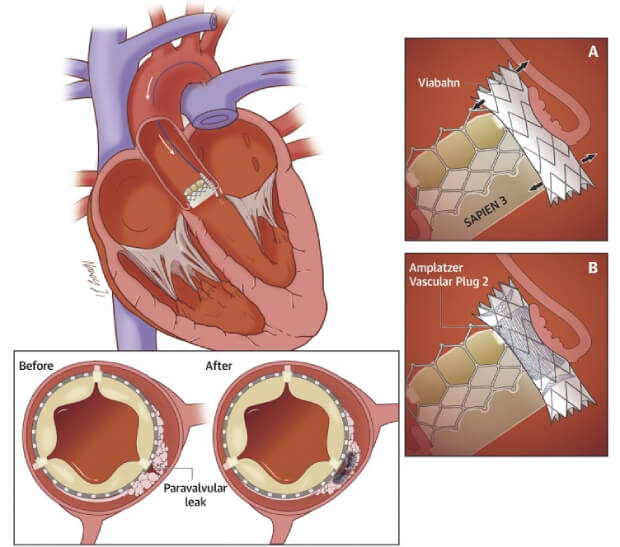
Paravalvular leak (PVL) closure is a procedure used to treat leaks that occur around a prosthetic heart valve, either mechanical or biological, after valve replacement surgery. These leaks, called paravalvular leaks, develop when blood escapes around the edges of the valve prosthesis rather than flowing directly through it. While small leaks are often harmless, significant leaks can lead to complications such as heart failure, hemolysis (destruction of red blood cells), and other cardiovascular issues, necessitating closure.
What Causes Paravalvular Leaks?
PVLs occur when the replacement valve does not fully seal against the heart tissue. The potential causes for this include:
- Inadequate fit: This may happen if the surrounding heart tissue is calcified, scarred, or has irregular shapes, preventing the valve from fitting snugly.
- Infection: Post-surgical infections like endocarditis can compromise the integrity of the valve and the surrounding tissue, leading to leaks.
- Tissue degeneration: Over time, the tissue holding the prosthetic valve may weaken, allowing blood to flow around it.
Most PVLs are diagnosed through imaging techniques like echocardiography or CT scans when a patient presents symptoms such as heart failure, shortness of breath, or unexplained anemia (due to hemolysis).
Why is PVL Closure Necessary?
For patients with moderate to severe PVLs, treatment is essential for managing symptoms and preventing further complications. Some key reasons for PVL closure include:
- Preventing Heart Failure: A large paravalvular leak can put extra strain on the heart, potentially leading to heart failure.
- Addressing Hemolysis: Blood flowing through the leak can cause shearing of red blood cells, resulting in hemolytic anemia, which can be severe and require frequent blood transfusions.
- Improving Quality of Life: Closing the leak often resolves symptoms like fatigue, shortness of breath, and heart murmurs, improving the patient’s overall quality of life.
Methods of PVL Closure
PVL closure can be performed either surgically or via a transcatheter approach, depending on the severity of the leak, the patient’s overall health, and the location of the leak.
1. Surgical PVL Closure
In more complex or severe cases, particularly when the valve or surrounding tissue has become infected or damaged, a repeat open-heart surgery may be necessary to either repair the existing valve or replace it entirely. Surgical PVL closure is effective but comes with the risks associated with open-heart surgery, especially in patients who may not be able to tolerate another invasive procedure.
2. Transcatheter PVL Closure
The transcatheter approach is minimally invasive and is becoming the preferred method for PVL closure, especially in high-risk patients who are not candidates for repeat surgery. The transcatheter technique involves the use of a catheter, which is threaded through a vein (usually from the groin) and guided to the heart under imaging.
- Procedure: A catheter is advanced to the site of the leak, and a closure device (similar to a plug or occluder) is deployed to seal the leak.
- Imaging Guidance: Transesophageal echocardiography (TEE) or fluoroscopy is typically used to guide the device’s placement.
- Devices Used: Commonly used closure devices include Amplatzer or other occluders specifically designed to close the leak without affecting the valve’s function.
Benefits of Transcatheter PVL Closure
- Minimally Invasive: This method avoids the need for open-heart surgery, leading to shorter recovery times and less risk of complications like infection.
- Quicker Recovery: Patients undergoing transcatheter PVL closure often have shorter hospital stays and can resume normal activities more quickly compared to those undergoing surgical repair.
- High Success Rate: Studies show that transcatheter PVL closure has a high success rate in reducing or completely eliminating leaks, thus improving symptoms and reducing the need for repeat interventions.
Risks and Considerations
As with any procedure, PVL closure carries some risks, including:
- Residual leaks: In some cases, the closure device may not fully seal the leak, necessitating further procedures.
- Device migration: The occluder or plug could move out of place, potentially causing blockages or new leaks.
- Infection: There’s a small risk of infection at the site of the procedure or around the valve prosthesis itself.
- Thrombosis: The placement of the device may increase the risk of blood clots, which could lead to stroke or other complications.
Patient Selection for PVL Closure
Not all patients with a PVL require immediate intervention. For those with small, asymptomatic leaks, close monitoring with regular imaging may be sufficient. However, patients presenting with significant symptoms – such as heart failure or hemolysis or those at high risk for complications are prime candidates for PVL closure, especially if they are not ideal candidates for additional surgery.

Dr. Rajpopat is a highly respected cardiologist based in Ahmedabad, known for his exceptional skills in treating complex heart conditions.
Specialities
Get In Touch
Epic Hospital, Rajpath Rangoli Rd, behind Rajpath Club, off Sarkhej – Gandhinagar Highway, Bodakdev, Ahmedabad, Gujarat 380054