EVAR (Endovascular Aneurysm Repair) for Abdominal Aortic Aneurysm in Ahmedabad
What is EVAR?
EVAR is a catheter-based procedure for an abdominal aortic aneurysm (AAA). The stent graft is a fabric tube supported by metal mesh. It is placed inside the aneurysm, so that blood flows through the graft and the weak wall is relieved of pressure. This lowers the risk of rupture. The thoracic aorta, in the chest, is treated with TEVAR (see our TEVAR page).
What is an aortic aneurysm, and who is at risk?
An aortic aneurysm is a weakened, widened section of the aortic wall. A large aneurysm can rupture and cause severe internal bleeding, which is an emergency. Most aneurysms cause no symptoms and are found on a scan done for another reason. Risk factors include:
- Age above 65 and male sex
- Smoking
- High blood pressure
- A family history of aneurysm
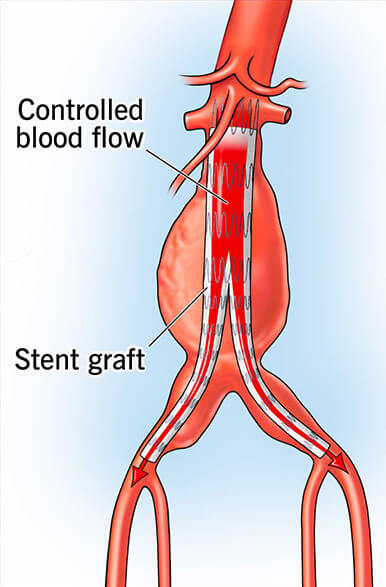
How is EVAR done?
- Planning: CT angiography measures the aneurysm and the arteries, and shows whether a stent graft will fit.
- Access: the femoral arteries in both groins are reached through small incisions or punctures.
- Placement: the stent graft is passed through the catheter and opened inside the aneurysm under X-ray guidance. It seals against healthy aorta above and below the bulge.
- Check: an aortogram checks the graft and that no blood leaks around it.
What are the advantages compared with open surgery?
- Smaller incisions and, usually, less pain
- A shorter hospital stay and quicker recovery in most patients
- A lower early risk than open surgery in many patients, but a greater need for later check-ups and procedures
Risks and limitations
- Endoleak: blood continues to flow into the aneurysm around the graft
- Graft movement or blockage of one of the graft limbs
- Kidney injury from contrast dye
- Bleeding or injury to the groin arteries
- A need for re-intervention in some patients, and lifelong follow-up scans
- Some aneurysm shapes are not suitable, and open surgery is advised for those
When is treatment advised?
Small aneurysms are watched with regular ultrasound or CT. Treatment is usually advised when the diameter reaches about 5.5 cm in men or about 5.0 cm in women, when it grows quickly, or when it causes pain or symptoms. Those limits are a guide only, and the decision depends on the shape of the aneurysm, the age and the health of the patient.
When should you see a doctor?
- If an ultrasound or CT has found an aneurysm
- If you are over 65, smoke and have a family history of aneurysm
Sudden severe pain in the abdomen or back, especially with fainting, is an emergency. Go to the nearest emergency department.
Related mitral procedures on this website
Frequently Asked Questions
Is EVAR open surgery?
At what size does an aortic aneurysm need treatment?
Why are scans needed after EVAR for life?
Disclaimer: The medical information provided on this website is for educational and informational purposes only and should not be considered as medical advice, diagnosis, or treatment. Always consult a qualified healthcare professional regarding any medical condition or treatment decisions. While every effort is made to ensure accuracy, doctor and/or clinic and/or hospital does not guarantee the completeness, reliability, or accuracy of the information published. Treatment outcomes may vary from patient to patient. This website does not offer diagnosis or treatment online. In an emergency, such as severe chest pain, fainting, sudden weakness or severe breathlessness, go to the nearest emergency department.

Dr. Abhishek Rajpopat is an interventional and structural heart cardiologist in Ahmedabad, Gujarat.
Specialities
Get In Touch
Epic Hospital, Rajpath Rangoli Rd, behind Rajpath Club, off Sarkhej – Gandhinagar Highway, Bodakdev, Ahmedabad, Gujarat 380054