TAVR (TAVI) in Ahmedabad: Transcatheter Aortic Valve Replacement
What is TAVR (TAVI)?
TAVR stands for transcatheter aortic valve replacement. It is also called TAVI, transcatheter aortic valve implantation. It is a treatment for severe aortic stenosis, a narrowing of the aortic valve that restricts blood flow from the heart to the body.
A new valve is placed inside the old, narrowed valve through a thin tube called a catheter. The chest is not opened and the heart does not have to be stopped.
Why is TAVR done?
In aortic stenosis the valve becomes stiff and narrow, usually from calcium build-up with age. When it is severe and causes symptoms, the valve needs to be replaced. Medicines can ease symptoms but cannot open the valve. Symptoms include:
- Breathlessness on effort
- Chest pain or tightness
- Dizziness or fainting
- Tiredness and reduced stamina
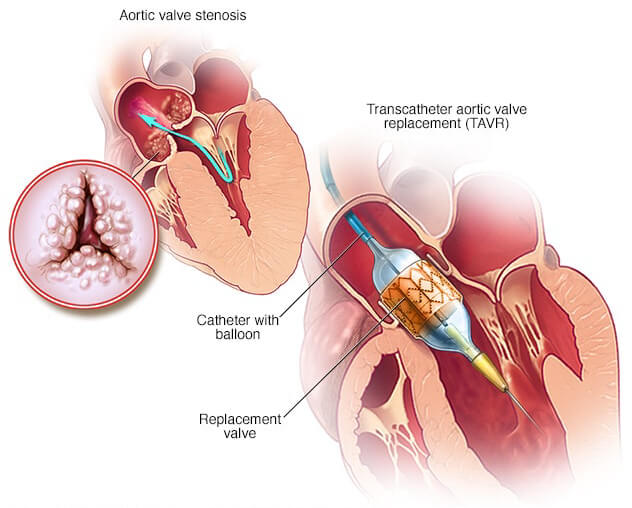
Types of TAVR valves
There are two main types. Balloon-expandable valves are opened with a balloon. Self-expanding valves open by themselves when released from the catheter. The choice depends on the shape and size of the valve and the aorta on CT, and on the other findings in each patient.
How long does a TAVR valve last?
Follow-up studies now run to several years, and durability data continue to grow. Valve durability beyond ten years is still being studied. This is one reason why younger patients should discuss long-term planning, including the chance of needing another valve procedure. Regular echo checks are part of follow-up.
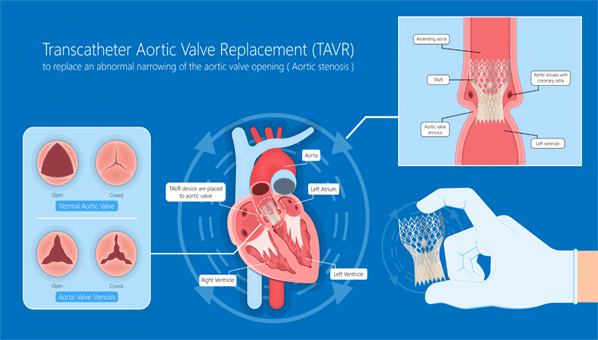
How is TAVR done?
- The procedure is done in a cath lab under X-ray guidance, with local anaesthesia and sedation or with general anaesthesia, depending on the patient.
- A catheter is passed through an artery, most often through a small puncture in the groin. Other routes are used when the groin arteries are not suitable.
- The catheter is guided to the aortic valve under X-ray and, often, echocardiography.
- The new valve, mounted on the catheter, is positioned inside the diseased valve. It is then expanded with a balloon, or released so that it opens by itself, depending on the valve type.
- The position and function of the valve are checked with imaging. The catheters are removed and the access site is closed.
Tests before TAVR
- ECG and echocardiography
- CT scan of the aortic valve, the aorta and the arteries from the groin (CT aortogram)
- Coronary angiography, to check the heart arteries
- Blood tests, including kidney function
- Transoesophageal echocardiography (TEE) in some patients
- A dental check, because infection in the mouth can affect a new valve
Who may be considered for TAVR?
- Patients with severe aortic stenosis and symptoms, in whom the Heart Team judges that TAVR is suitable
- Older patients, and patients at higher risk with open-heart surgery because of age, frailty, lung, liver or kidney disease or earlier chest surgery
- Patients whose earlier tissue (bioprosthetic) valve has narrowed or leaked (valve-in-valve TAVR)
Younger patients at low surgical risk are often advised surgery, because the long-term record of surgical valves is longer. In between, the choice is a shared decision.
Who may not be suitable for TAVR?
- Patients with a mechanical aortic valve
- Active infection of the heart valve (endocarditis)
- Valve or artery anatomy that is not suitable on CT
- Patients in whom another illness limits life expectancy, so that little benefit is expected
Risks and complications
- Bleeding or injury to the artery at the access site
- Stroke or transient ischaemic attack
- A need for a permanent pacemaker, because the valve can press on the heart’s electrical pathway
- A leak around the new valve (paravalvular leak)
- Kidney injury from the contrast dye used for imaging
- The valve moving from its position, or needing a second valve
- Rarely, emergency surgery, infection or death
The Heart Team assesses these risks for each patient before the procedure.
Recovery and follow-up
Most patients stay in hospital for a few days. Blood-thinning medicine is given as advised, and the groin site is cared for as instructed. A follow-up visit with an echo is usually done about a month after the procedure, and then yearly. Tell your dentist about the valve, because dental infections can reach it.
How are patients assessed for TAVR?
- Examination and review of symptoms, echo and CT findings
- Discussion of the findings with the patient and family, including options, risks and alternatives
- A Heart Team discussion with a cardiac surgeon and imaging specialists [CONFIRM: that this is his practice]
- Planning of the valve size and the access route from the CT scan
When should you see a cardiologist?
- Breathlessness, chest tightness or dizziness on effort
- A murmur or an echo report that says aortic stenosis
- Fainting or near-fainting
If you have severe chest pain, fainting or severe breathlessness at rest, go to the nearest emergency department.
Related mitral procedures on this website
Frequently Asked Questions
Is TAVR the same as TAVI?
Is TAVR an open-heart surgery?
How long do I stay in hospital after TAVR?
Who decides between TAVR and open surgery?
Will I need a pacemaker after TAVR?
Disclaimer: The medical information provided on this website is for educational and informational purposes only and should not be considered as medical advice, diagnosis, or treatment. Always consult a qualified healthcare professional regarding any medical condition or treatment decisions. While every effort is made to ensure accuracy, doctor and/or clinic and/or hospital does not guarantee the completeness, reliability, or accuracy of the information published. Treatment outcomes may vary from patient to patient. This website does not offer diagnosis or treatment online. In an emergency, such as severe chest pain, fainting, sudden weakness or severe breathlessness, go to the nearest emergency department.

Dr. Abhishek Rajpopat is an interventional and structural heart cardiologist in Ahmedabad, Gujarat.
Specialities
Get In Touch
Epic Hospital, Rajpath Rangoli Rd, behind Rajpath Club, off Sarkhej – Gandhinagar Highway, Bodakdev, Ahmedabad, Gujarat 380054