Transcatheter Mitral Valve Repair and Replacement in Ahmedabad (TEER and TMVR)
What is mitral regurgitation?
The mitral valve controls blood flow from the left atrium to the left ventricle. In mitral regurgitation the valve does not close tightly, and blood leaks backward into the atrium. This can cause breathlessness, tiredness and, over time, heart failure. A mild leak is common and often needs only follow-up.
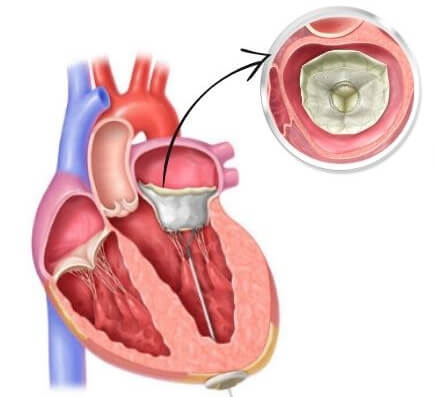
Treatment options
| Medicines | Open-heart surgery | Catheter repair (TEER) | Catheter replacement (TMVR) |
What it does | Eases symptoms and treats heart failure | Repairs or replaces the valve | A clip joins the two flaps to reduce the leak | A new valve is placed through a catheter |
Chest opened | No | Yes | No | No |
Usually considered when | First step for everyone | Fit patients with a leak that can be repaired | Selected patients at high surgical risk, with a suitable valve | Selected patients with earlier valve or ring, or heavy calcium, with suitable anatomy |
How is mitral TEER done?
- A catheter is passed through the vein in the groin and across the wall between the two upper chambers into the left atrium.
- Echocardiography (TEE) and X-ray guide the clip delivery system to the mitral valve.
- The clip grasps the edges of the two valve flaps and joins them. More than one clip may be used.
- The leak and the pressure in the heart are checked. The catheter is then removed.
Who may be considered for catheter treatment?
- Primary (degenerative) mitral regurgitation, for example from prolapse or a flail leaflet, in patients at high risk with surgery
- Secondary (functional) mitral regurgitation, due to an enlarged or weak left ventricle, in patients who still have symptoms despite the best medical treatment and who have suitable valve anatomy
A Heart Team of cardiologists, imaging specialists and a cardiac surgeon makes the decision for each patient.
What are the possible benefits?
In selected patients, the leak is reduced, symptoms such as breathlessness may improve and fewer hospital stays for heart failure may be needed. The result differs from patient to patient, and some leak may remain.
Risks and challenges
- A leak that remains, or a narrowing of the valve caused by the clip
- The clip detaching from one of the flaps, or the device not working as planned
- Bleeding or injury at the groin, or a small hole left in the wall between the upper chambers
- Stroke, irregular heart rhythm, infection and, rarely, emergency surgery
Related mitral procedures on this website
Frequently Asked Questions
What is MitraClip?
Is mitral TEER open-heart surgery?
What is the difference between TEER and TMVR?
Who decides if I am suitable?
Disclaimer: The medical information provided on this website is for educational and informational purposes only and should not be considered as medical advice, diagnosis, or treatment. Always consult a qualified healthcare professional regarding any medical condition or treatment decisions. While every effort is made to ensure accuracy, doctor and/or clinic and/or hospital does not guarantee the completeness, reliability, or accuracy of the information published. Treatment outcomes may vary from patient to patient. This website does not offer diagnosis or treatment online. In an emergency, such as severe chest pain, fainting, sudden weakness or severe breathlessness, go to the nearest emergency department.

Dr. Abhishek Rajpopat is an interventional and structural heart cardiologist in Ahmedabad, Gujarat.
Specialities
Get In Touch
Epic Hospital, Rajpath Rangoli Rd, behind Rajpath Club, off Sarkhej – Gandhinagar Highway, Bodakdev, Ahmedabad, Gujarat 380054