Thoracic Endovascular Aortic Repair
Thoracic Endovascular Aortic Repair (TEVAR)
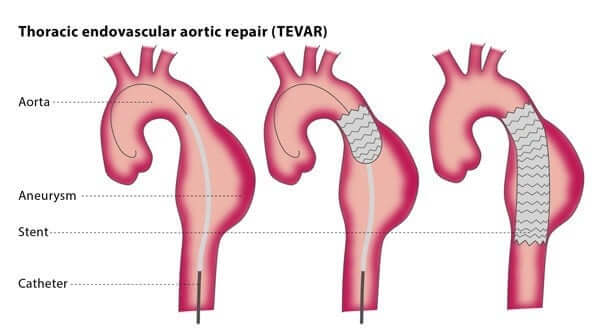
Thoracic Endovascular Aortic Repair (TEVAR) is a minimally invasive procedure used to treat aortic disease in the thoracic (chest) region of the body. The primary purpose of TEVAR is to repair the aorta, the largest artery in the body, in cases where it has been damaged or weakened, such as in the presence of an aortic aneurysm, dissection, or trauma.
What is TEVAR?
TEVAR involves the insertion of a stent graft into the damaged portion of the thoracic aorta. A stent graft is a fabric-covered metal mesh tube that reinforces the weakened section of the artery, allowing blood to flow properly and preventing the aneurysm from rupturing. Unlike traditional open surgery, where a large incision is made, TEVAR uses a catheter-based approach, making it a less invasive option for patients.
Conditions Treated with TEVAR
TEVAR is used to treat several serious conditions affecting the thoracic aorta, including:
- Thoracic Aortic Aneurysm (TAA): A bulge in the wall of the aorta that can rupture, leading to life-threatening bleeding.
- Aortic Dissection: A tear in the inner layer of the aorta, causing blood to flow between the layers of the vessel wall, which can lead to a rupture.
- Traumatic Aortic Injury: Damage to the aorta from trauma, often seen in car accidents or falls.
- Penetrating Atherosclerotic Ulcers: A condition where the plaque buildup on the inner walls of the aorta penetrates the vessel wall, increasing the risk of rupture.
The TEVAR Procedure
- Patient Assessment: Before TEVAR is performed, imaging techniques such as CT scans and angiograms are used to map the anatomy of the aorta and determine the size and location of the damaged area. This helps in planning the procedure and selecting the correct size of the stent graft.
- Catheter Insertion: TEVAR is performed under general anesthesia. A small incision is made in the groin or leg to access the femoral artery, through which the catheter is inserted and guided toward the thoracic aorta.
- Stent Graft Deployment: The stent graft is delivered to the affected area through the catheter. Once in position, the stent is expanded to fit the walls of the aorta, covering the weakened section and restoring normal blood flow.
- Post-Procedure Monitoring: After the stent is in place, the catheter is removed, and the patient is monitored for complications. Imaging studies, such as a follow-up CT scan, are used to ensure the graft is correctly positioned and functioning properly.
Benefits of TEVAR
- Minimally Invasive: TEVAR offers a minimally invasive alternative to traditional open aortic repair surgery. It involves smaller incisions, which result in less pain, a shorter recovery time, and reduced scarring.
- Shorter Hospital Stay: Patients undergoing TEVAR often experience shorter hospital stays compared to those having open surgery, sometimes being discharged within a few days.
- Lower Risk of Complications: The risk of complications such as infection or excessive blood loss is lower with TEVAR than with open surgery. TEVAR also has a lower risk of paralysis due to spinal cord ischemia, which can occur during more invasive procedures.
- Quicker Recovery: Because it is less invasive, patients recover faster and can return to normal activities sooner than with open surgery.
Risks and Considerations
While TEVAR has many advantages, there are also some risks involved, including:
- Endoleak: This occurs when blood continues to leak into the aneurysm sac around the edges of the stent graft. This can increase the risk of rupture and may require further treatment.
- Stent Migration: The stent graft can move or shift from its original position, which can lead to improper coverage of the aneurysm or dissection.
- Infection or Bleeding: As with any surgical procedure, there is a risk of infection or bleeding at the incision site or around the aorta.
- Kidney Damage: The contrast dye used during the imaging part of the procedure can potentially cause kidney damage, particularly in patients with pre-existing kidney issues.
- Access Vessel Complications: During the insertion of the catheter, there is a risk of damaging the blood vessels, especially if they are fragile or narrowed by atherosclerosis.
Who is a Candidate for TEVAR?
TEVAR is often recommended for patients who are considered at high risk for traditional open surgery due to age, overall health, or the complexity of their aortic condition. However, not every patient with aortic disease is a candidate for TEVAR. Factors such as the size and location of the aneurysm, the patient’s anatomy, and other medical conditions will be taken into account when deciding if TEVAR is the best treatment option.

Dr. Rajpopat is a highly respected cardiologist based in Ahmedabad, known for his exceptional skills in treating complex heart conditions.
Specialities
Get In Touch
Epic Hospital, Rajpath Rangoli Rd, behind Rajpath Club, off Sarkhej – Gandhinagar Highway, Bodakdev, Ahmedabad, Gujarat 380054