Atrial Septal Defect (ASD)
Atrial Septal Defect (ASD)
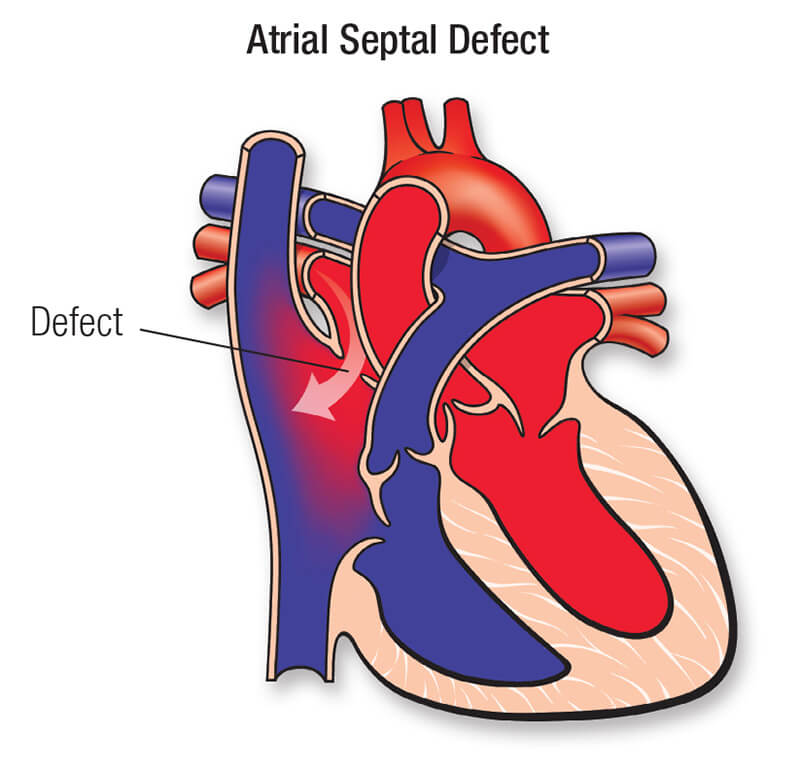
ASD is a common congenital heart disease where the septum of the heart is not properly formed. This creates a left-to-right shunt, which leads to mixing of oxygenated and deoxygenated blood. This causes pulmonary hypertension and right heart enlargement.
Procedures to treat ASD
- Percutaneous closure using a device: It is a noninvasive procedure which is considered depending on the size and severity of the defect. The procedure is performed by inserting a special closure device either folded or attached to the catheter into the vein of the leg and is advanced to the heart through the defect, which closes the hole by a special mechanism.
- Closure through open-heart surgery
Risks of the procedures
Although the success rate is about 95%, the procedures still have some risks involved, such as:
- Device dislodgement leading to emergency heart surgery
- Dislodgement of clot or air bubbles
- Arrhythmia
- Allergic dye reaction
- Injury to artery, veins or nerves
- Infection
How does Dr. Rajpopat manage ASD?
- The patient is administered with medications or fluids before the procedure.
- The procedure takes only 1–2 hours and the patient can be discharged soon.
- Dr. Rajpopat has immense experience, which helps in a seamless process to treat ASD.
Disclaimer: The medical information provided on this website is for educational and informational purposes only and should not be considered as medical advice, diagnosis, or treatment. Always consult a qualified healthcare professional regarding any medical condition or treatment decisions. While every effort is made to ensure accuracy, doctor and/or clinic and/or hospital does not guarantee the completeness, reliability, or accuracy of the information published. Treatment outcomes may vary from patient to patient.

Dr. Rajpopat is a highly respected cardiologist based in Ahmedabad, known for his exceptional skills in treating complex heart conditions.
Specialities
Get In Touch
Epic Hospital, Rajpath Rangoli Rd, behind Rajpath Club, off Sarkhej – Gandhinagar Highway, Bodakdev, Ahmedabad, Gujarat 380054