Tricuspid Valve Edge-to-Edge Repair
Tricuspid Valve Edge-to-Edge Repair
- The tricuspid valve is one of four valves in your heart. It sits between the right atrium and the right ventricle, and its job is to stop blood from flowing backward each time your heart beats.
- Tricuspid regurgitation is a condition where this valve doesn’t close properly, allowing blood to leak backward into the right atrium instead of moving forward as it should.
- Over time, this leak can cause blood to back up into the liver, abdomen, and legs — leading to swelling, fatigue, and breathlessness.
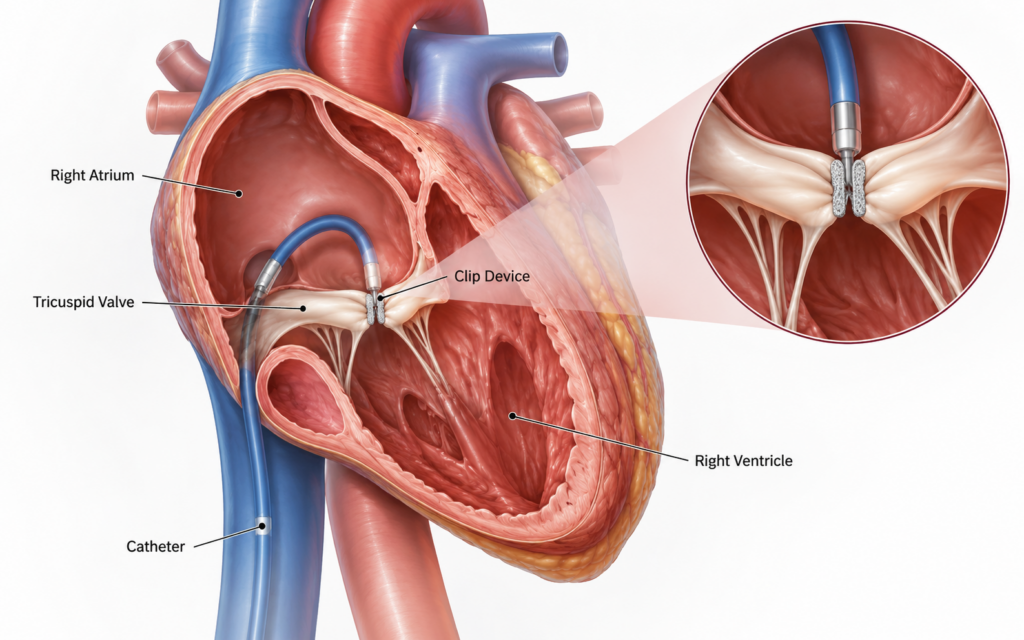
- Tricuspid Valve Edge-to-Edge Repair is a catheter-based procedure that clips the two sides of the leaking valve closer together, reducing the backward flow — without open-heart surgery.
- The clip is guided through a vein in the groin and placed directly onto the valve using live imaging (echocardiography and X-ray), attaching the leaflets edge-to-edge so they close more completely with each heartbeat.
When do you need Tricuspid Valve Edge-to-Edge Repair?
- Moderate to severe tricuspid regurgitation causing noticeable symptoms
- Ongoing swelling in the legs, ankles, or abdomen despite medication
- Persistent fatigue or breathlessness linked to the leaking valve
- High risk for open-heart surgery due to age, other health conditions, or previous cardiac procedures
- Symptoms that continue despite being on appropriate heart failure medication
Risks of Tricuspid Valve Edge-to-Edge Repair
- Bleeding or bruising at the catheter access site
- The clip not attaching as planned, or coming loose over time
- Some regurgitation may remain even after the procedure
- Irregular heart rhythms during or after the procedure
- Rare risk of injury to the heart or surrounding blood vessels
- Infection at the access site
When to call Dr. Abhishek Rajpopat?
- If swelling in your legs, ankles, or abdomen suddenly gets worse
- If you notice unexplained, rapid weight gain over a few days
- If breathlessness increases, especially while lying down or during light activity
- If you feel your heart racing, skipping beats, or beating irregularly
- If you experience chest discomfort or pain
Disclaimer: The medical information provided on this website is for educational and informational purposes only and should not be considered as medical advice, diagnosis, or treatment. Always consult a qualified healthcare professional regarding any medical condition or treatment decisions. While every effort is made to ensure accuracy, doctor and/or clinic and/or hospital does not guarantee the completeness, reliability, or accuracy of the information published. Treatment outcomes may vary from patient to patient.

Dr. Rajpopat is a highly respected cardiologist based in Ahmedabad, known for his exceptional skills in treating complex heart conditions.
Specialities
Get In Touch
Epic Hospital, Rajpath Rangoli Rd, behind Rajpath Club, off Sarkhej – Gandhinagar Highway, Bodakdev, Ahmedabad, Gujarat 380054