What Is TAVR?
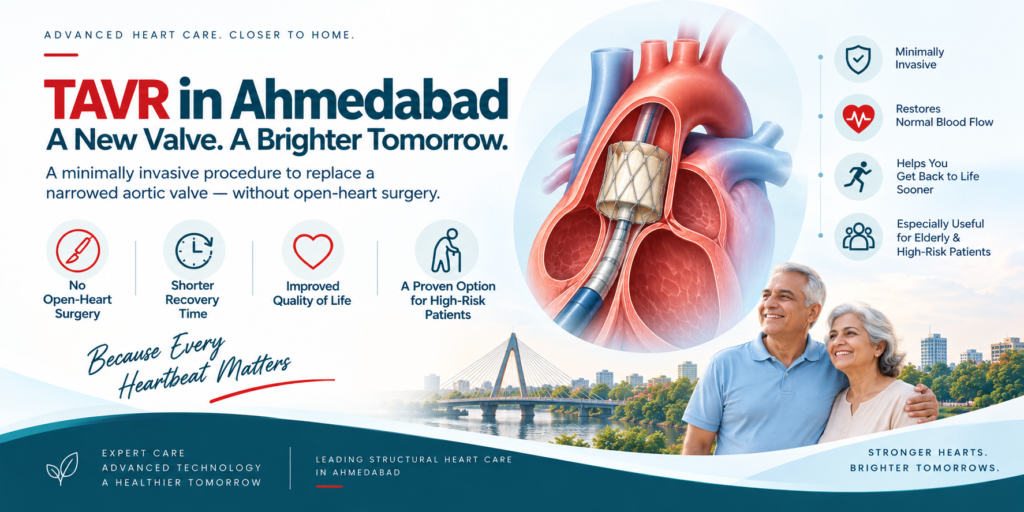
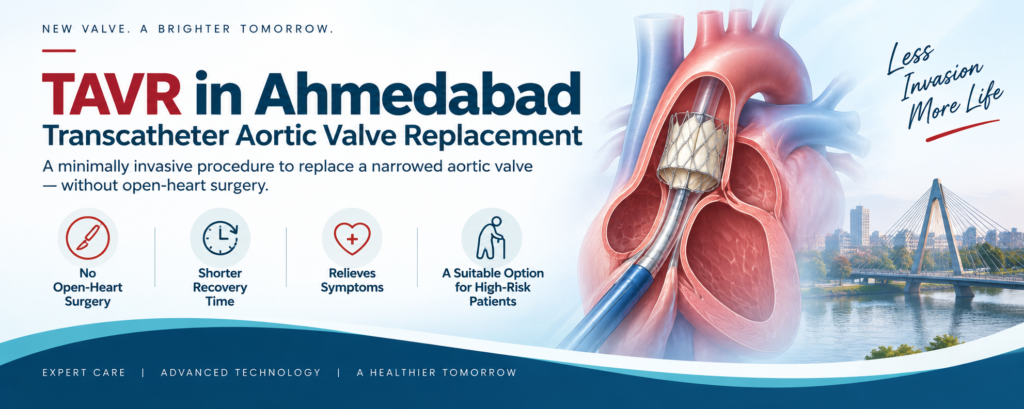
TAVR treats aortic stenosis, a condition where the aortic valve becomes narrowed and restricts blood flow out of the heart. Instead of opening the chest, a replacement valve is guided through the blood vessels and placed directly inside the damaged valve. TAVR valves come in two main types: self- expanding valves and balloon-expandable valves.
How Is TAVR Done?
A small incision is made in the groin (or sometimes the arm), and a catheter is inserted into the artery.
Live X-ray imaging guides the catheter up to the heart and into position at the aortic valve.
The replacement valve is passed through the catheter and positioned inside the old valve.
For balloon-expandable valves, the balloon is inflated to secure the new valve in place; self- expanding valves open on their own once released.
The catheter is removed once the new valve is confirmed to be working correctly.
Who Needs TAVR?
Patients with severe aortic stenosis who face high risk from open-heart surgery
Patients with other conditions (such as liver or lung disease) that make invasive surgery riskier
Patients whose previous valve has narrowed again over time
Who Should Not Undergo TAVR?
Patients who have previously had mechanical valve surgery at the aortic valve location
Diagnostic Tests Required Before TAVR
Electrocardiogram (ECG)
Echocardiogram
Transesophageal echocardiogram
CT aortogram
What Are the Risks of TAVR?
Failure or leaking of the replacement valve (the most serious complication)
Heart attack, stroke, or transient ischaemic attack (TIA)
Blood clots, bleeding, or infection
Specific precautions are taken throughout the procedure and recovery to minimize these risks.
How Long Does a TAVR Valve Last?
Research shows strong long-term durability: in a 2019 study, 91% of TAVR patients showed no signs of severe valve degeneration 5 to 10 years after implantation — durability considered as good as, or better than, surgical bioprosthetic valves.
Frequently Asked Questions
Is TAVR painful?
Most patients experience minimal discomfort. Sedation or anaesthesia keeps you comfortable throughout, with only mild soreness at the puncture site afterward.
How long is the hospital stay for TAVR in Ahmedabad?
Typically 3 to 5 days, with many patients walking the day after the procedure.
Is TAVR available for elderly patients?
Yes — TAVR was specifically developed for elderly and frail patients who face higher risk from open surgery.
About Dr. Abhishek Rajpopat
Dr. Abhishek Rajpopat brings 14+ years of experience in cardiology, including 750+ TAVR procedures performed globally. He specializes in advanced structural heart procedures and follows a patient-centered approach focused on complete, individualized care. His work has been recognized with multiple honors, including a Gold Medal in Cardiology. To discuss whether this procedure is right for you or a family member, visit www.drabhishekrajpopat.com.