Transcatheter Mitral Valve Replacement (TMVR) - Lampoon
TMVR - LAMPOON Technique
Transcatheter Mitral Valve Replacement (TMVR) is an advanced, minimally invasive procedure that treats severe mitral valve disease, particularly in patients who are at high risk for traditional open-heart surgery. One of the key challenges of TMVR is ensuring the new valve does not interfere with the function of other heart structures, particularly the left ventricular outflow tract (LVOT). A highly specialized technique called LAMPOON (Laceration of the Anterior Mitral Valve Leaflet to Prevent Outflow Obstruction) has been developed to address this challenge and is becoming an essential part of the TMVR process in certain high-risk cases.
What is the LAMPOON Technique?
The LAMPOON technique is designed to prevent LVOT obstruction, which can occur when the anterior mitral valve leaflet blocks blood flow after a TMVR procedure. This is a serious and potentially life-threatening complication, particularly in patients with certain anatomical features, such as small ventricles or a large anterior mitral leaflet.
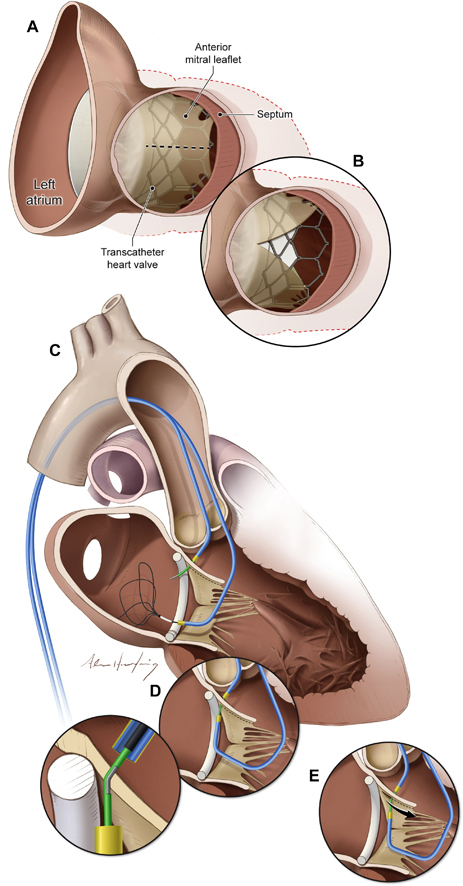
During LAMPOON, the surgeon uses a catheter-based technique to deliberately cut the anterior mitral leaflet before placing the new valve. By preemptively creating a controlled tear in the leaflet, the technique reduces the risk of it obstructing the LVOT after the new valve is implanted.
How LAMPOON Works
The procedure is typically performed under general anesthesia, with the guidance of real-time imaging such as fluoroscopy and transesophageal echocardiography (TEE). The LAMPOON technique is carried out as follows:
- Catheter Insertion: A catheter is introduced through the femoral artery or vein and guided to the heart.
- Positioning of Guide Wires: Guide wires are placed through the leaflet of the mitral valve. They are then electrified to lacerate the anterior leaflet in a controlled manner.
- Leaflet Laceration: Using electrocautery, a deliberate laceration is made along the anterior mitral leaflet, ensuring it will not obstruct the LVOT after valve replacement.
- TMVR Procedure: Once the anterior leaflet has been divided, the TMVR is performed, with the new mitral valve prosthesis being positioned in the mitral valve’s place.
- Post-procedure Monitoring: Continuous imaging checks for any leaks or residual obstruction in the LVOT.
Benefits of the LAMPOON Technique in TMVR
- Prevention of LVOT Obstruction: By preemptively lacerating the anterior mitral leaflet, the LAMPOON technique eliminates one of the most dangerous complications associated with TMVR—LVOT obstruction. This helps improve the safety of the procedure, especially in patients with small ventricles or who have previously undergone heart surgeries.
- Broader Access to TMVR for High-Risk Patients: The LAMPOON technique allows more patients, particularly those with complex anatomy, to undergo TMVR. These patients would otherwise have been deemed ineligible due to the high risk of LVOT obstruction.
- Minimally Invasive: Like TMVR, the LAMPOON technique is minimally invasive and catheter-based, allowing patients to recover more quickly than with traditional open-heart surgery.
- Effective in Valve-in-Valve Procedures: The LAMPOON technique has proven especially useful in valve-in-valve TMVR procedures, where a transcatheter valve is implanted in a previously replaced mitral valve prosthesis.
Which patients recieve the LAMPOON in TMVR
The LAMPOON technique is particularly beneficial for patients who:
- Have mitral annular calcification (MAC): These patients are at higher risk of LVOT obstruction due to calcium buildup.
- Undergo valve-in-valve or valve-in-ring TMVR: For patients who already have a surgical valve or annuloplasty ring, the leaflet laceration helps avoid obstruction by these existing structures.
- Have small or narrow left ventricles, which increase the risk of blood flow obstruction if the anterior leaflet is not properly managed.
Risks and Considerations before LAMPOON Technique
While the LAMPOON technique is highly effective, it carries some risks, including:
- Perforation or Tearing: The intentional laceration of the leaflet must be precise. Any mistake could lead to unintended damage to other structures.
- Blood Clots or Stroke: Like other transcatheter procedures, there is a risk of clot formation, which could lead to stroke or other complications.
- Residual Mitral Regurgitation: If the laceration is not fully effective, some degree of regurgitation may persist after the procedure.

Dr. Rajpopat is a highly respected cardiologist based in Ahmedabad, known for his exceptional skills in treating complex heart conditions.
Specialities
Get In Touch
Epic Hospital, Rajpath Rangoli Rd, behind Rajpath Club, off Sarkhej – Gandhinagar Highway, Bodakdev, Ahmedabad, Gujarat 380054