Endovascular Aneurysm Repair (EVAR)
Endovascular Aneurysm Repair (EVAR)
Endovascular Aneurysm Repair (EVAR) is a minimally invasive procedure designed to treat abdominal aortic aneurysms (AAA) and, less commonly, thoracic aortic aneurysms (TAA). An aneurysm is a dangerous bulging or ballooning in the wall of an artery, and when it occurs in the aorta, the body’s main blood vessel, it can be life-threatening if it ruptures.
EVAR allows surgeons to repair the aneurysm by reinforcing the weakened section of the aorta without the need for traditional open surgery. This procedure is a major advancement in vascular surgery, providing a less invasive alternative to open surgical repair with faster recovery times and lower risks.
What is an Aortic Aneurysm?
An aortic aneurysm occurs when the wall of the aorta weakens, causing it to enlarge. If left untreated, the aneurysm can grow and eventually rupture, leading to severe internal bleeding and, often, death. Abdominal aortic aneurysms (AAAs) occur in the lower section of the aorta, while thoracic aortic aneurysms (TAAs) occur in the chest area.
Risk factors for aneurysms include:
- Age: Most patients are over 65.
- Smoking: A major risk factor for aortic aneurysms.
- High blood pressure: Can increase stress on the aorta.
- Genetic factors: Family history of aneurysms.
The EVAR Procedure: How it Works
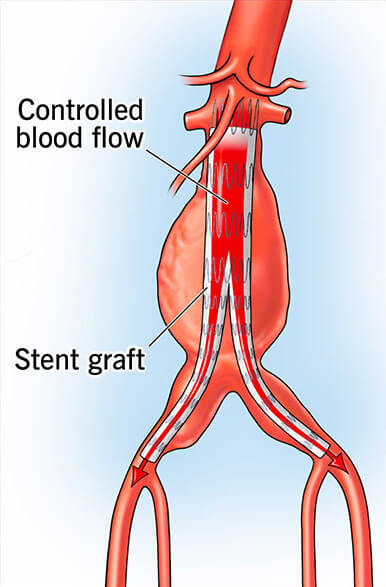
Endovascular Aneurysm Repair (EVAR) involves placing a stent graft inside the aorta at the location of the aneurysm. The stent graft acts as a scaffold, reinforcing the weakened aorta and preventing the aneurysm from growing or rupturing. Here’s how the procedure is generally performed:
- Access via the Femoral Artery: Surgeons make small incisions in the groin to access the femoral arteries on either side of the legs. A catheter is inserted into the artery to guide the stent graft into place.
- Deployment of the Stent Graft: Using real-time X-ray imaging (fluoroscopy), the stent graft is delivered through the catheter and positioned within the aneurysm. The graft expands to fit snugly against the aortic wall, sealing off the aneurysm.
- Blood Flow Re-Routed: Once in place, the stent graft allows blood to flow through it, bypassing the weakened section of the aorta. This eliminates pressure on the aneurysm, reducing the risk of rupture.
- Follow-Up Imaging: After the procedure, follow-up imaging tests (such as CT scans) are performed to ensure the graft is in the correct position and that the aneurysm is no longer at risk of rupture.
Benefits of EVAR
Despite its advantages, EVAR is not without risks, and it may not be suitable for all patients. Some potential challenges include:
- Endoleak: One of the most common complications of EVAR is an endoleak, where blood continues to leak into the aneurysm sac, even after the stent graft is in place. This can increase the risk of rupture and may require additional treatment.
- Stent Migration: Over time, the stent graft may shift from its original position, particularly if the aorta continues to dilate. This can cause the aneurysm to grow again or reduce blood flow through the aorta.
- Limited Durability: While EVAR is highly effective in the short term, long-term outcomes are still being studied. Some patients may require re-intervention due to graft complications over time.
- Suitability for Certain Patients: Not all patients with an aneurysm are suitable for EVAR. Patients with certain anatomical characteristics, such as an irregularly shaped aorta or significant aortic narrowing, may require open surgery.
Who is a Candidate for EVAR?
- EVAR is often recommended for patients with large or symptomatic aneurysms, particularly those who are not good candidates for open surgery due to age, frailty, or other health issues. The decision to proceed with EVAR is based on a thorough assessment of the patient’s anatomy, overall health, and the size and location of the aneurysm.
- Patients with aneurysms smaller than 5 cm in diameter are usually monitored with regular imaging, as small aneurysms have a lower risk of rupture. However, larger aneurysms, especially those over 5.5 cm, are at higher risk of rupture and may require intervention.

Dr. Rajpopat is a highly respected cardiologist based in Ahmedabad, known for his exceptional skills in treating complex heart conditions.
Specialities
Get In Touch
Epic Hospital, Rajpath Rangoli Rd, behind Rajpath Club, off Sarkhej – Gandhinagar Highway, Bodakdev, Ahmedabad, Gujarat 380054