What Is TAVR?
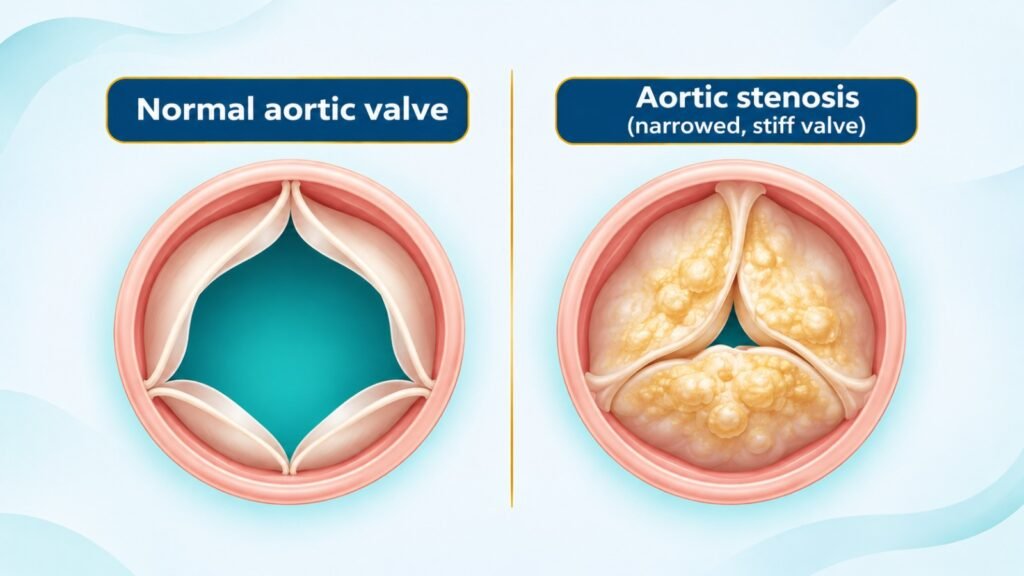
The aortic valve is like a door inside your heart. With age, this door can become narrow and stiff. This is called aortic stenosis, and it can cause breathlessness, chest pain and tiredness.
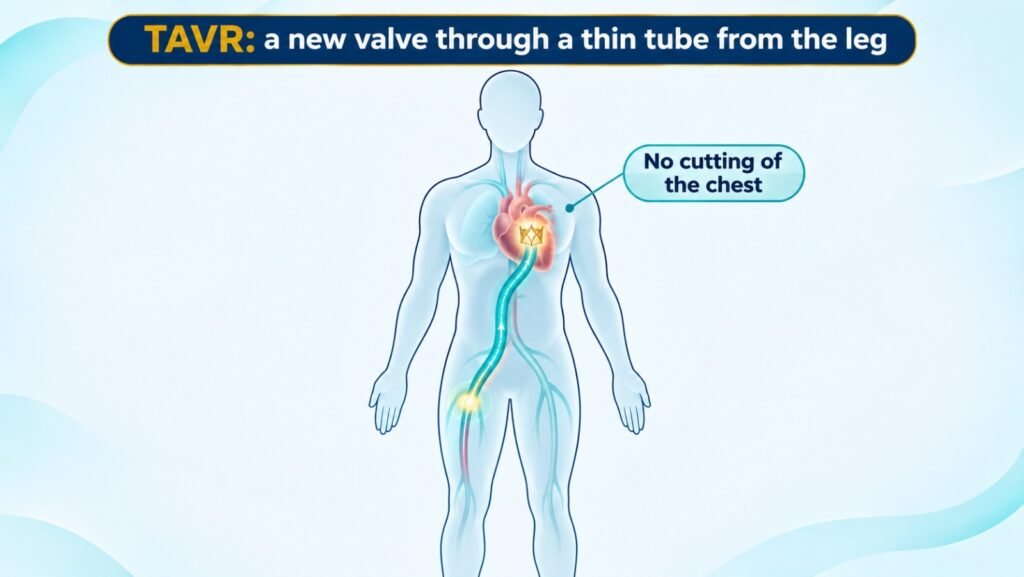
TAVR (also called TAVI) places a new heart valve without open-heart surgery. The valve is passed up through a thin tube, usually from the leg, with no cutting of the chest. Read more about TAVR in Ahmedabad.
- Hospital stay: often 2–3 days
- Back to routine: many people return to their normal routine within about a week, though this varies from person to person
How Long Does a TAVR Valve Last?
Valves that have been in use the longest have been followed in patients for up to 10 years, and they are still working well. In one 10-year trial of older patients with lower surgical risk (the NOTION trial), severe wear of the valve was less common after TAVR than after open surgery, and overall outcomes were similar. These results apply to the valve and the patients studied in that trial.
Newer valves, including some made in India, have been studied for a shorter time, so their 10-year results are not available yet. This is simply because they are new.
A newer valve is not a bad valve. It just has not been around long enough to measure.
Two Types of TAVR Valves: Self-Expanding vs Balloon-Expandable
- Self-expanding valve: opens up on its own, like a spring. In many patients, especially when the valve is small, it can give good blood flow. The doctor may also be able to adjust its position during the procedure.
- Balloon-expandable valve: opened with a small balloon. It is shorter in size, which can help if you need treatment of the heart arteries later. It may also carry a lower chance of needing a pacemaker.
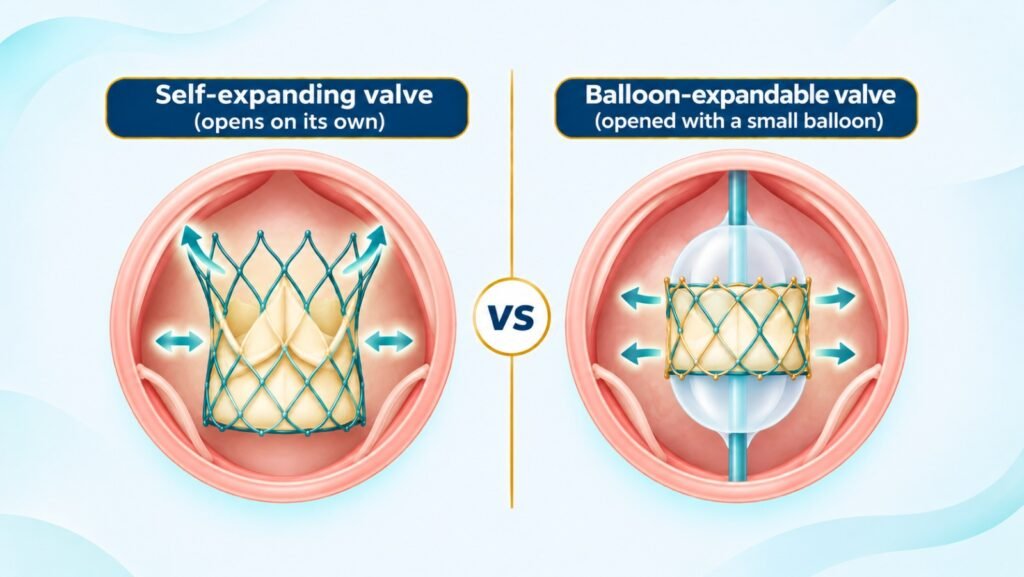
Which one is better? Neither suits everyone. Your doctor looks at your CT scan, valve size, age and heart rhythm, and then picks the valve that suits your heart.
Planning for the Future: Redo TAVR (Valve Replacement After TAVR)
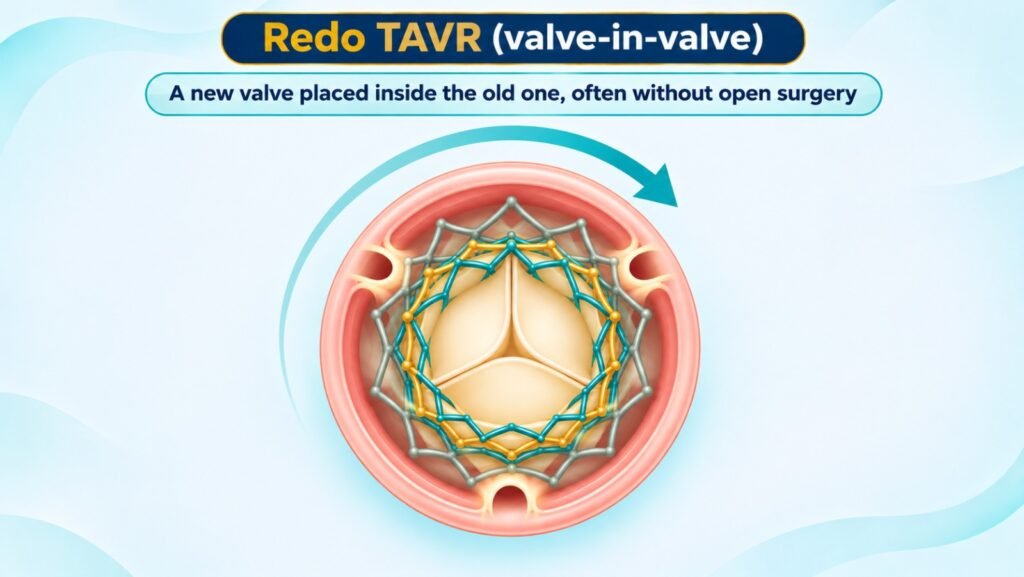
If a TAVR valve wears out after many years, a second TAVR can often be done inside the old one, usually without open surgery. This is called redo TAVR or valve-in-valve. Whether it is possible depends on the person.
It is more likely to be possible when the first procedure is planned with the future in mind and the valve is placed in the right position, lined up with your natural valve. Correct placement helps keep the heart’s own blood vessels open, so future treatment stays possible.
How to Make Your Valve Last Longer
- Get a heart scan (2D Echo) once a year, or as your doctor advises
- Take your medicines on time
- Keep BP, sugar and cholesterol under control
- Look after your teeth to prevent infection
- Keep your follow-up visits. More on this in our guide to [Life After TAVR]
Frequently Asked Questions
How long does a TAVR valve last?
Valves that have been used the longest are working well after up to 10 years. Newer valves have been studied for a shorter time. The answer is different for each person, so regular follow-up matters.
How many days will I stay in hospital after TAVR?
Often 2–3 days, but it can be longer depending on your health and recovery.
Can a TAVR valve be replaced later?
Often, a second TAVR can be done inside the old valve, without open surgery. Whether it is possible depends on the person and on how the first valve was placed.
Which is better, a self-expanding or a balloon-expandable valve?
Neither suits everyone. Your doctor chooses after looking at your CT scan, valve size, age and heart rhythm.
Is TAVR suitable for older people?
TAVR may be a suitable option for many older people, depending on their overall health. Your doctor will explain whether it is right for you.
Where can I get TAVR in Ahmedabad?
You can consult an interventional cardiologist who performs TAVR. Dr. Abhishek Rajpopat consults in Ahmedabad. See TAVR in Ahmedabad or contact the clinic.